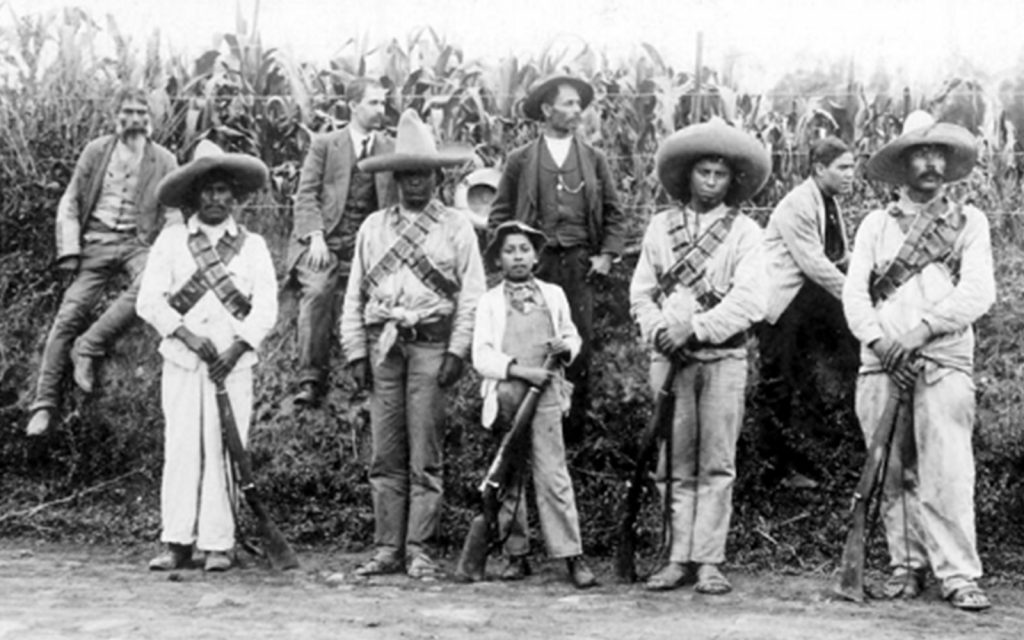
Elite Family Networks in Latin America

Evidence from Wikipedia Genealogical Data, 19th-21st Centuries

Matías Deneken

2026-04-01

Motivation

Latin American political history is often described in terms of oligarchies, elite continuity, and the intergenerational transmission of power. Yet, despite a rich historiographical tradition, we still lack systematic, comparable evidence on how elite families are actually connected across countries and over time.

This paper addresses that gap by bringing a computational approach to the study of elites. Using large-scale biographical data from Spanish-language Wikipedia, we reconstruct kinship networks across multiple Latin American countries and analyze their structure using tools from network science.

Construction of Brasilia

Main Research Question

Do elite family networks structure political power reproduction in Latin America — and can we measure this at scale?

A computational text analysis of a collectively authored biographical archive (Spanish-language Wikipedia).

The key argument is that family networks are not just a reflection of political order—they are part of the infrastructure through which that order is reproduced. By comparing these structures across countries, we show how different configurations of elite networks are associated with distinct political trajectories in the region.
Theoretical Framework

Historical baseline

Research on Latin America has long emphasized the role of notable families in linking economic resources, marriage strategies, and access to political power. Classic work shows that elites reproduce themselves not only through institutions, but through kinship networks that structure opportunities across generations.

Social reproduction and elite closure

This connects to broader debates on social reproduction and elite closure. Drawing on Bourdieu, elites can maintain their position by converting economic capital into social ties and institutional access, often through endogamy or strategic alliances.

Network perspective and comparative interpretation

Network theory highlights a tension between closure and reach: while some families consolidate power through dense internal ties, others expand influence by bridging across groups. At a larger scale, network structures—such as dense cores, fragmented clusters, or brokerage positions—can reflect distinct modes of political organization. Rather than treating these as deterministic patterns, we use them as interpretive tools to understand variation across countries.

Data & Pipeline

Pipeline

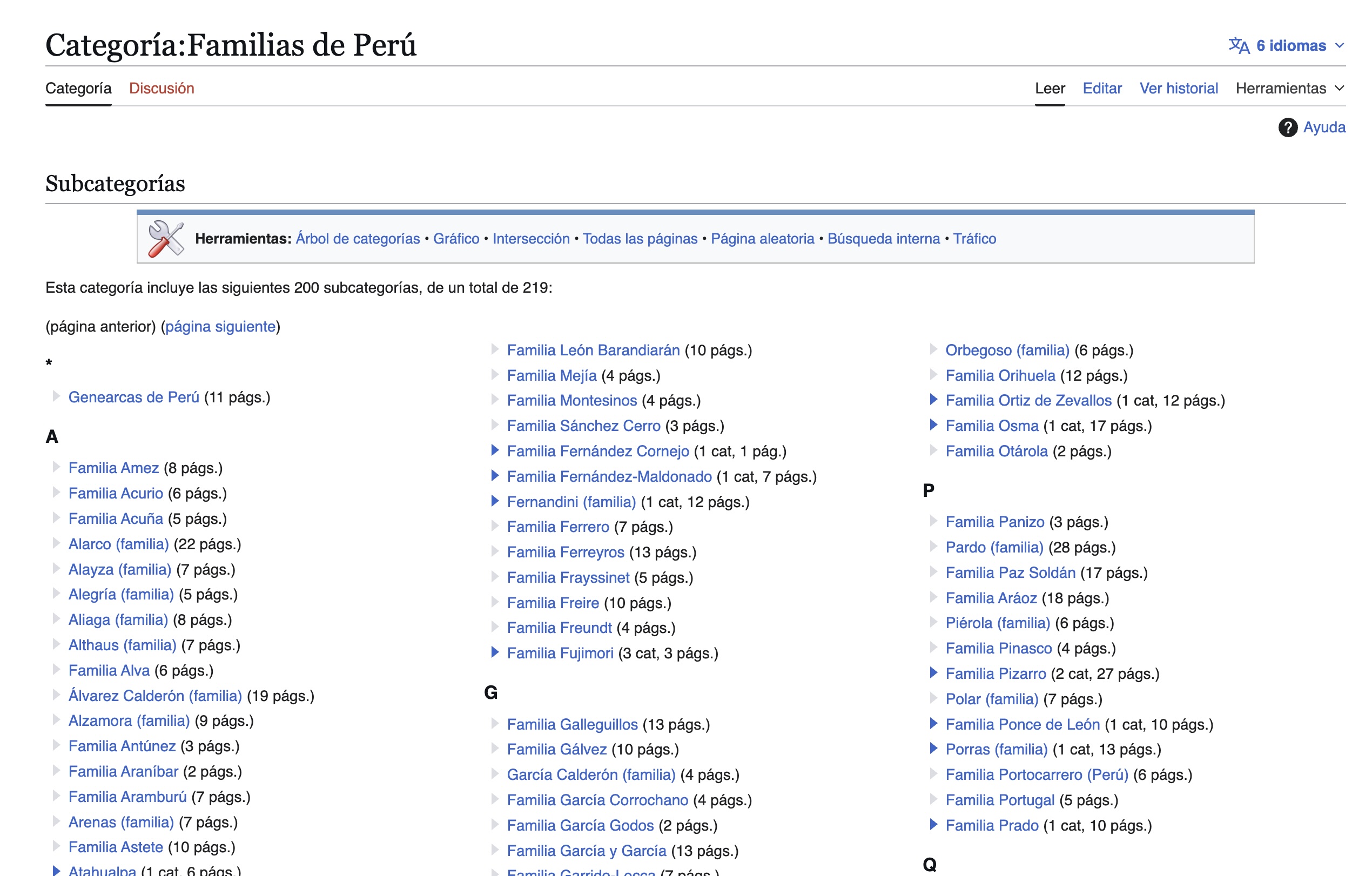
Source. Spanish-language Wikipedia (es.wikipedia.org) as a collectively authored biographical archive.

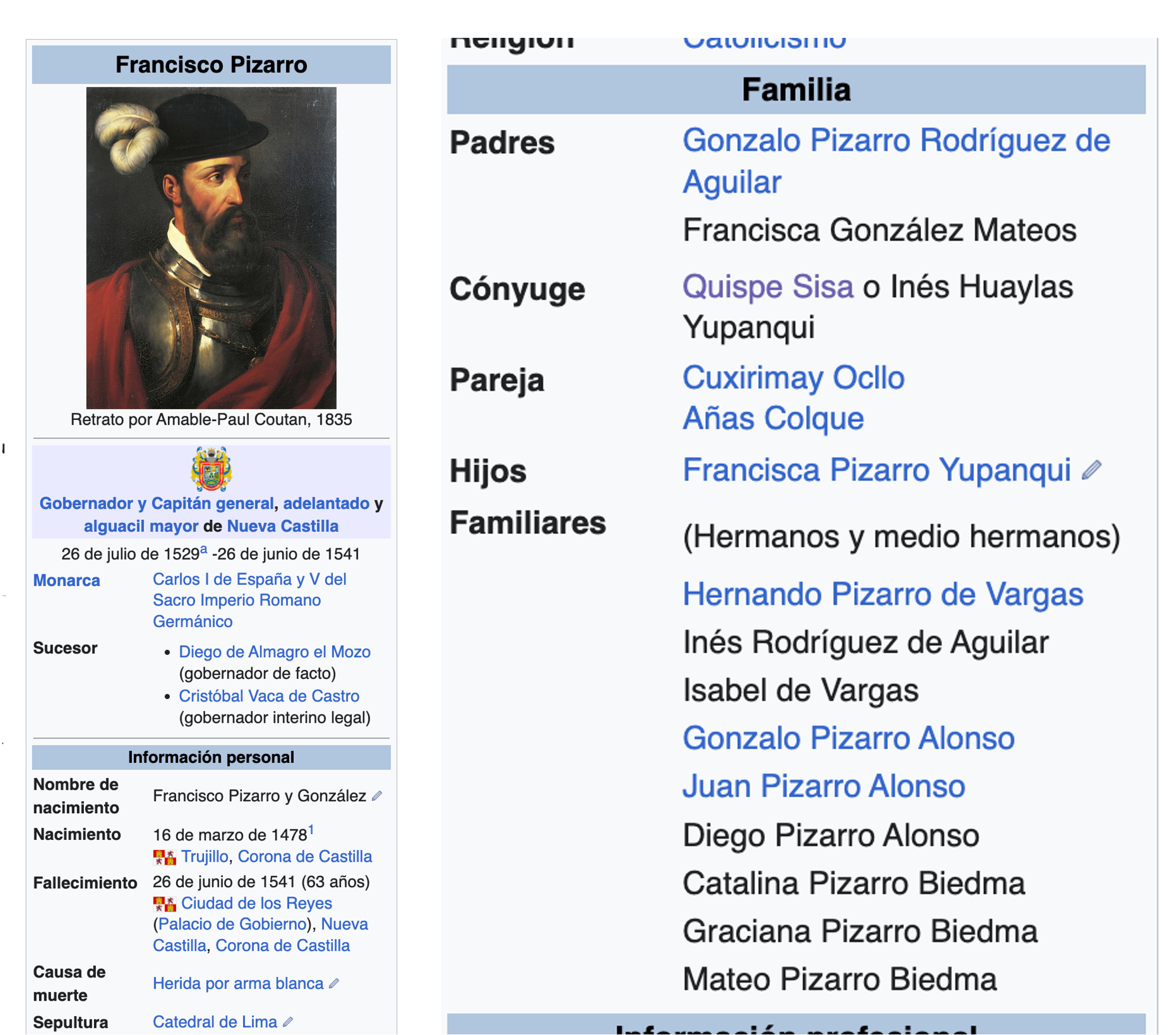
Extraction targets

  • Kinship: conyuge, pareja, padres, hijos, hermanos
  • Institutional: partido_politico, educacion
  • Succession: predecesor, sucesor

Entity resolution. Internal hyperlinks — not string matching — link mentioned relatives to the corresponding scraped biographies.

Corpus (10 republics)
ARG · BOL · CHL · COL · ECU · MEX · PRY · PER · URY · VEN

6,711 individuals after deduplication
8,201 matched kinship edges
92.9% with parsed birth year
743 families (SBM unit of analysis)

Methodology: Two-Stage NLP Pipeline

Stage 1

Rule-based Extraction

Classical NLP over Spanish-language Wikipedia: rate-limited scraping, regex parsing of infobox fields, and Unicode normalization.

rvest · regex · infobox schema · familia_norm

Prioritizes precision over recall.

Stage 2

Relational Resolution

Transforms extracted entities into a typed multi-layer graph using internal Wikipedia hyperlinks — not string matching — as ground truth for entity resolution.

hyperlink resolution · graph construction · typed edges (kinship / succession / co-partisanship)

Moves from text to network structure.

The core move: Stage 1 gives us entities. Stage 2 gives us relations between entities.

Wikipedia: Data source

Wikipedia: Data source

Hypotheses — overview

Hyp. Core claim Mechanism
H1 Elite persistence is mediated by social closure (endogamy). Marriage market as a defensive buffer against political turnover.
H2 Elite survival depends on multidimensional interconnectivity. Endogamy + transnational ties jointly buffer shocks.
H3 Networks shift from expansive alliances to self-referential clusters. Intensive kinship substitutes for weak state institutions over time.

Results

Initial findings

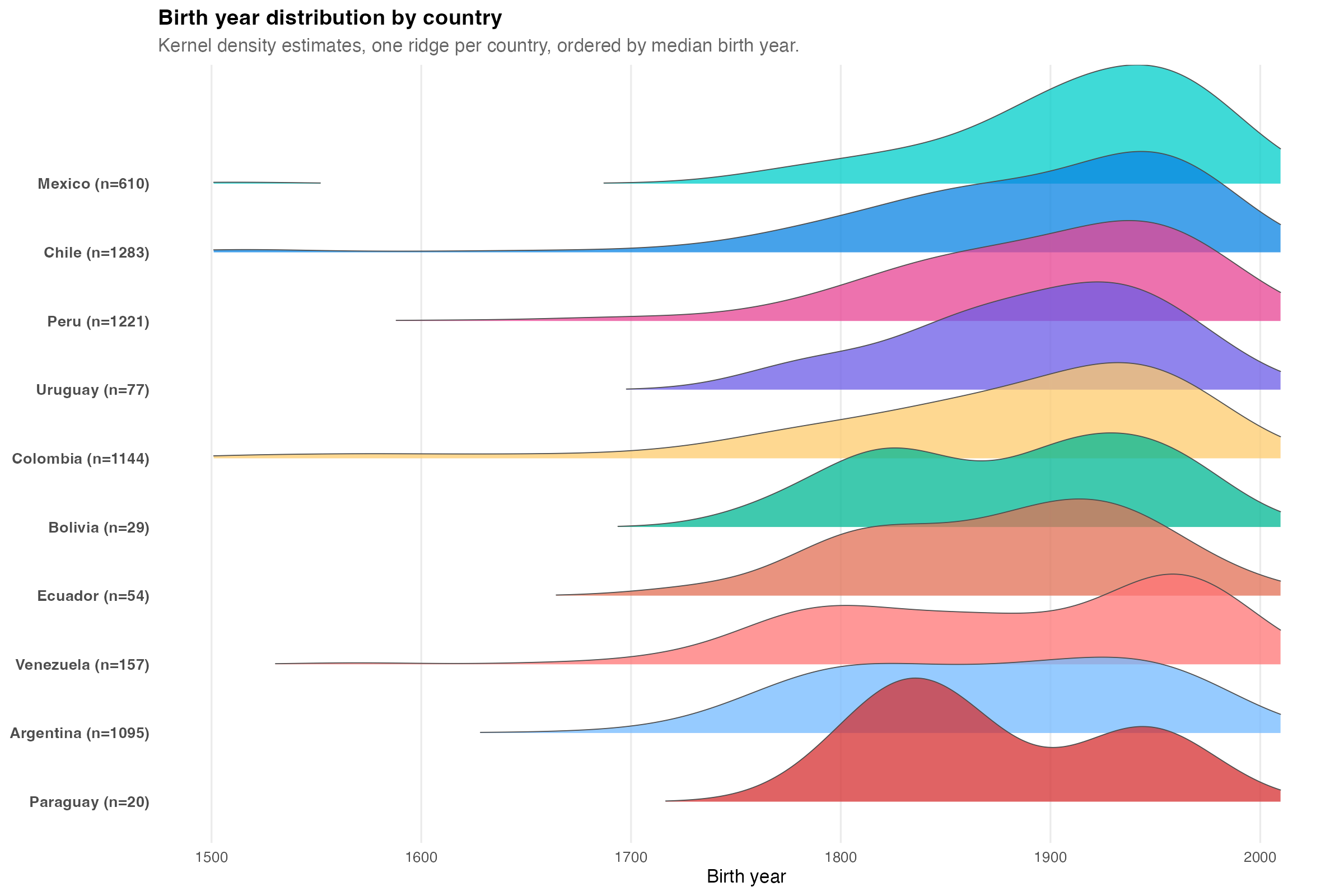
Birth-year distributions by country (kernel density ridges).

Birth Year Distribution: Continuity vs. Rupture

Elite Persistence (Chile & Mexico): Note the “long-tail” distribution starting in the 1500s. This reflects a path-dependent continuity where colonial-era lineages remained visible in the power structure for centuries. Modern Concentration: The significant “bulk” in the 20th century across all cases highlights the shift toward modern civil registration and the expansion of the professionalized political class.

H1: Endogamy Rates by Country

Country Marriages Endogamy rate Transnational rate
Paraguay 4 1.000 0.000
Ecuador 10 0.900 0.200
Mexico 108 0.870 0.139
Argentina 177 0.864 0.203
Venezuela 25 0.840 0.200
Chile 251 0.837 0.092
Colombia 151 0.795 0.086
Uruguay 18 0.778 0.389
Peru 104 0.769 0.115
Bolivia 3 0.667 0.667
  • Endogamy differs sharply across countries.
  • Larger political fields tend to show lower closure.
  • Uruguay is an outlier in transnational marriage share.
  • Paraguay reaches maximum closure in a very small corpus.

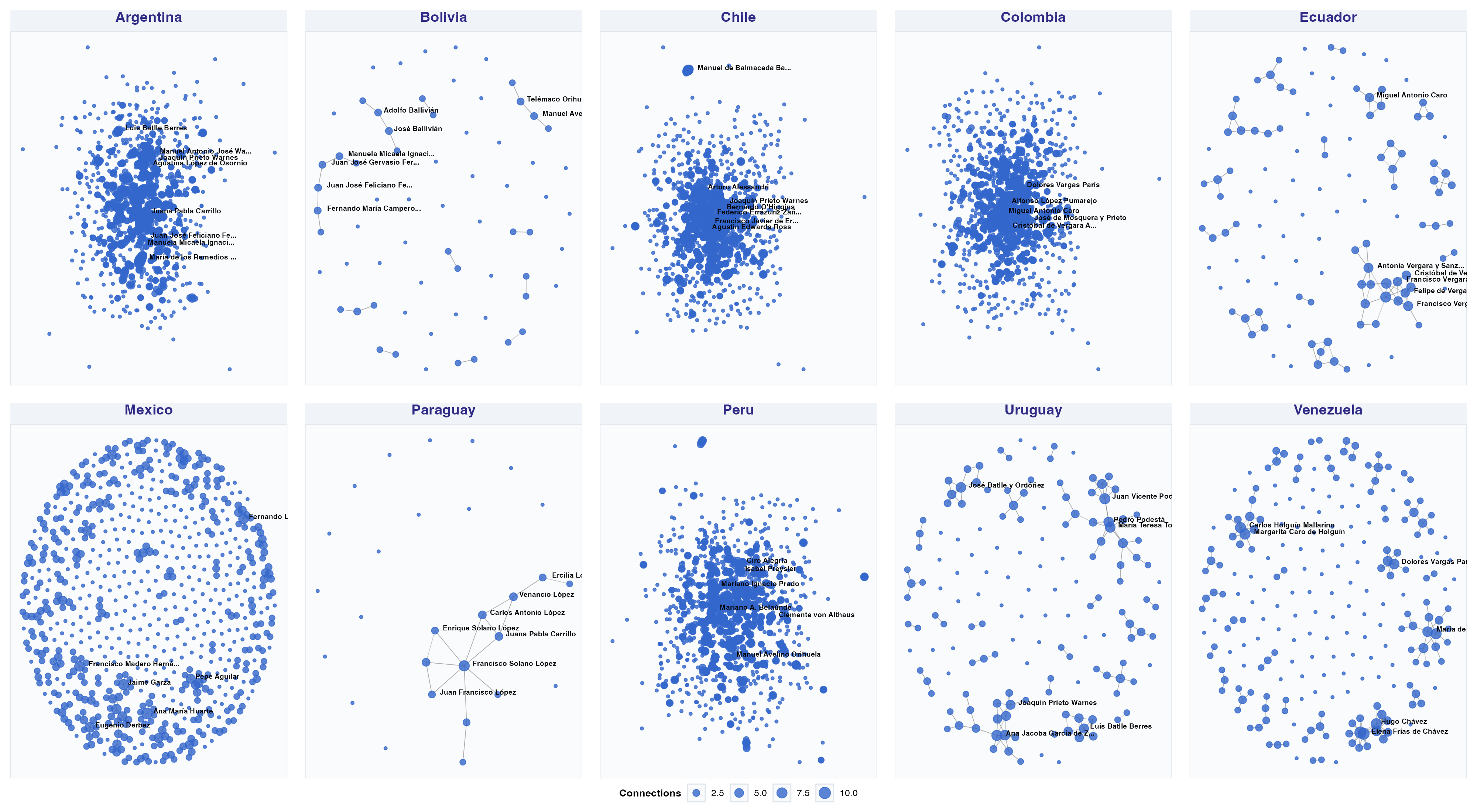
H1: National Kinship Layouts (Facets)

Exploratory faceted layouts by country (Fruchterman–Reingold).

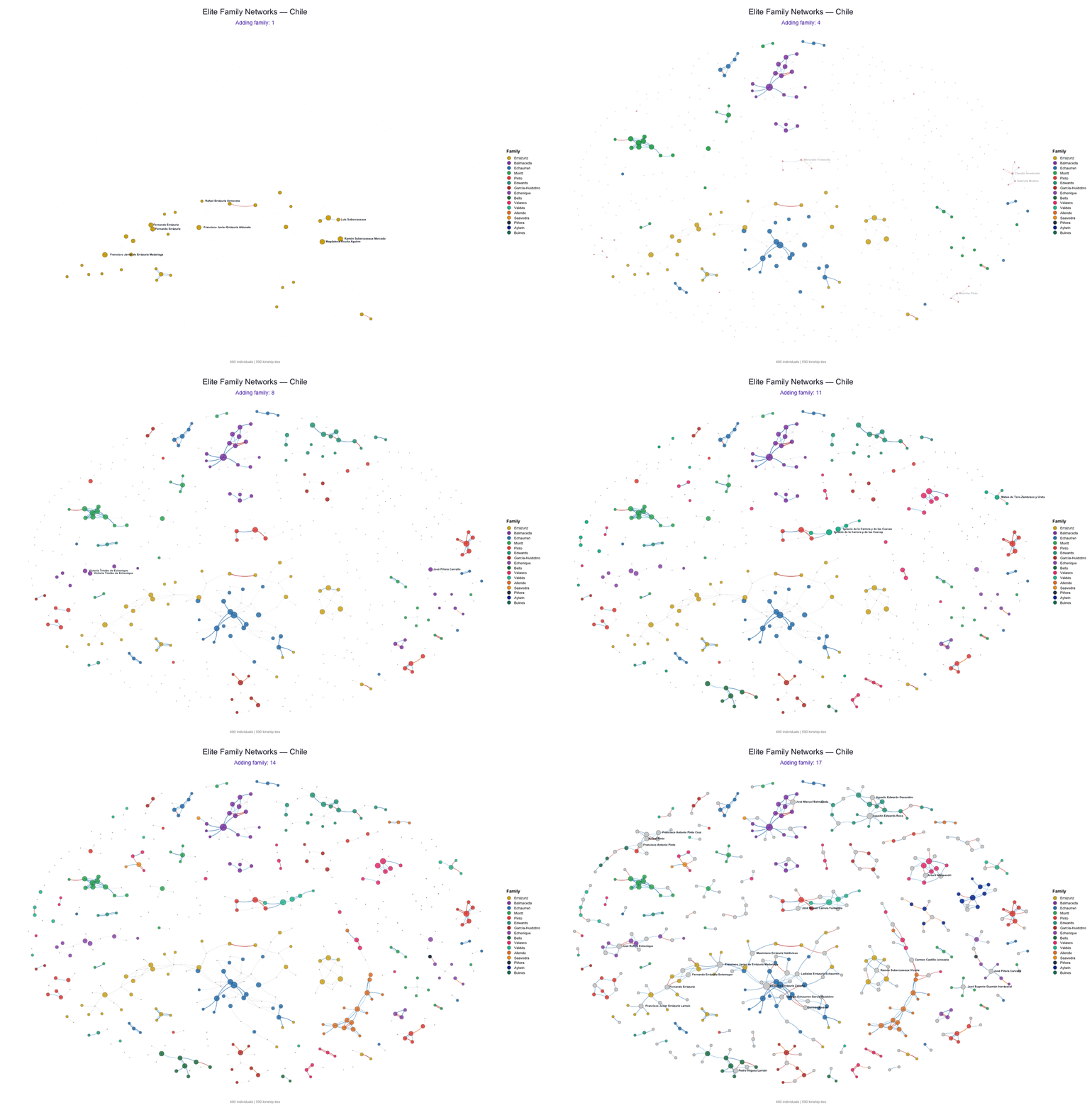
H1: Chilean elite

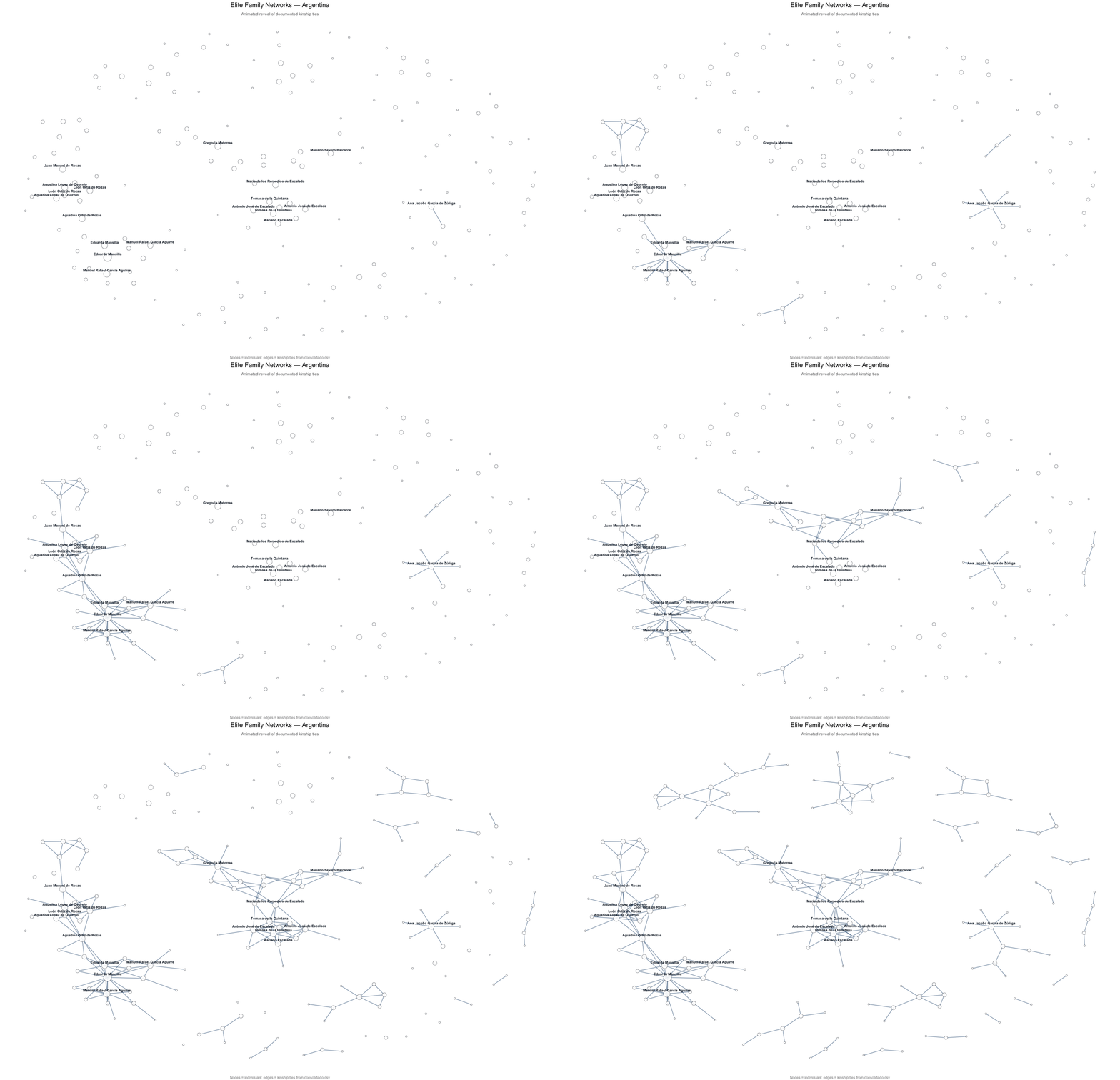
H1: Argentine elite

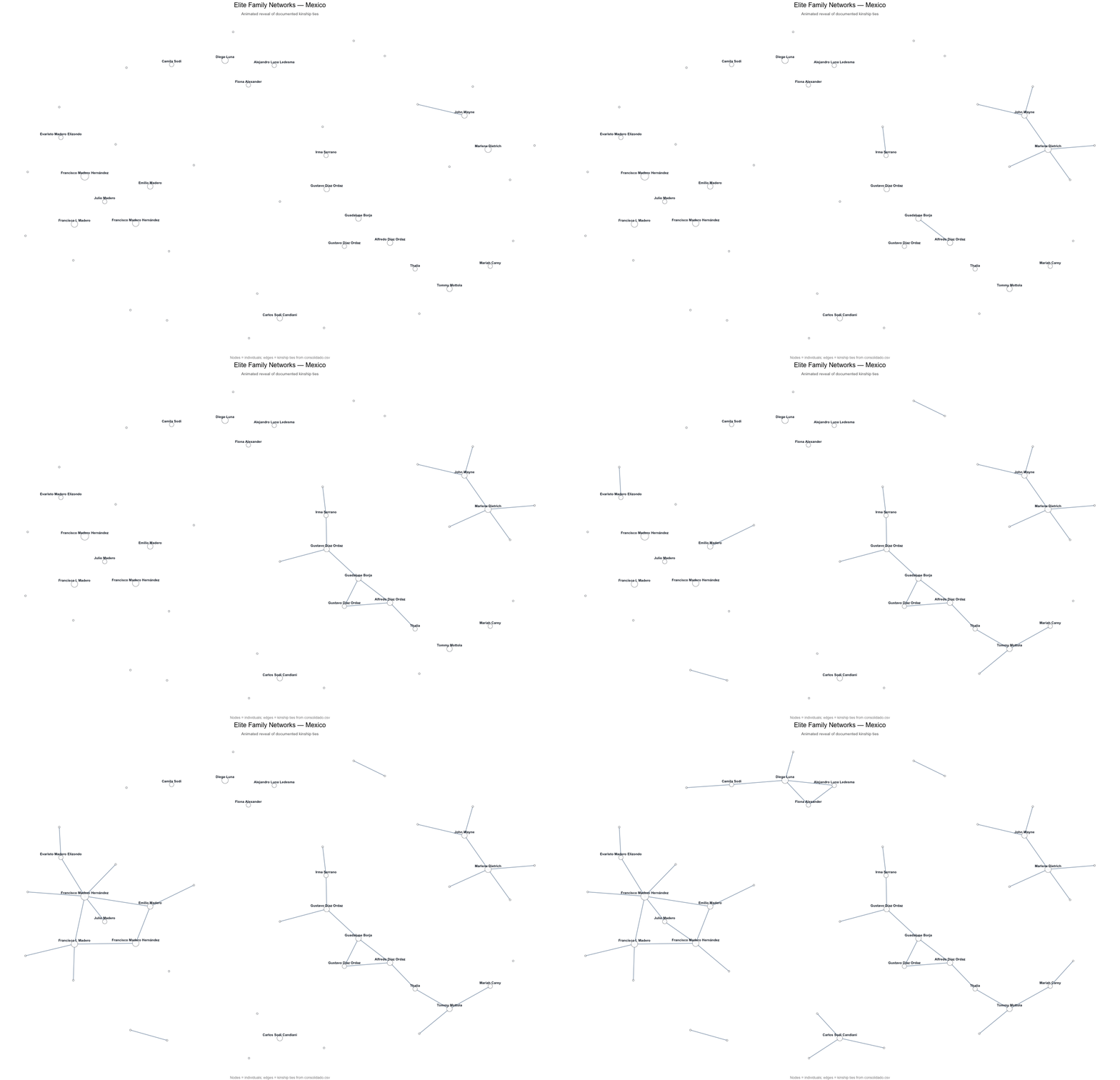
H1: Mexican elite

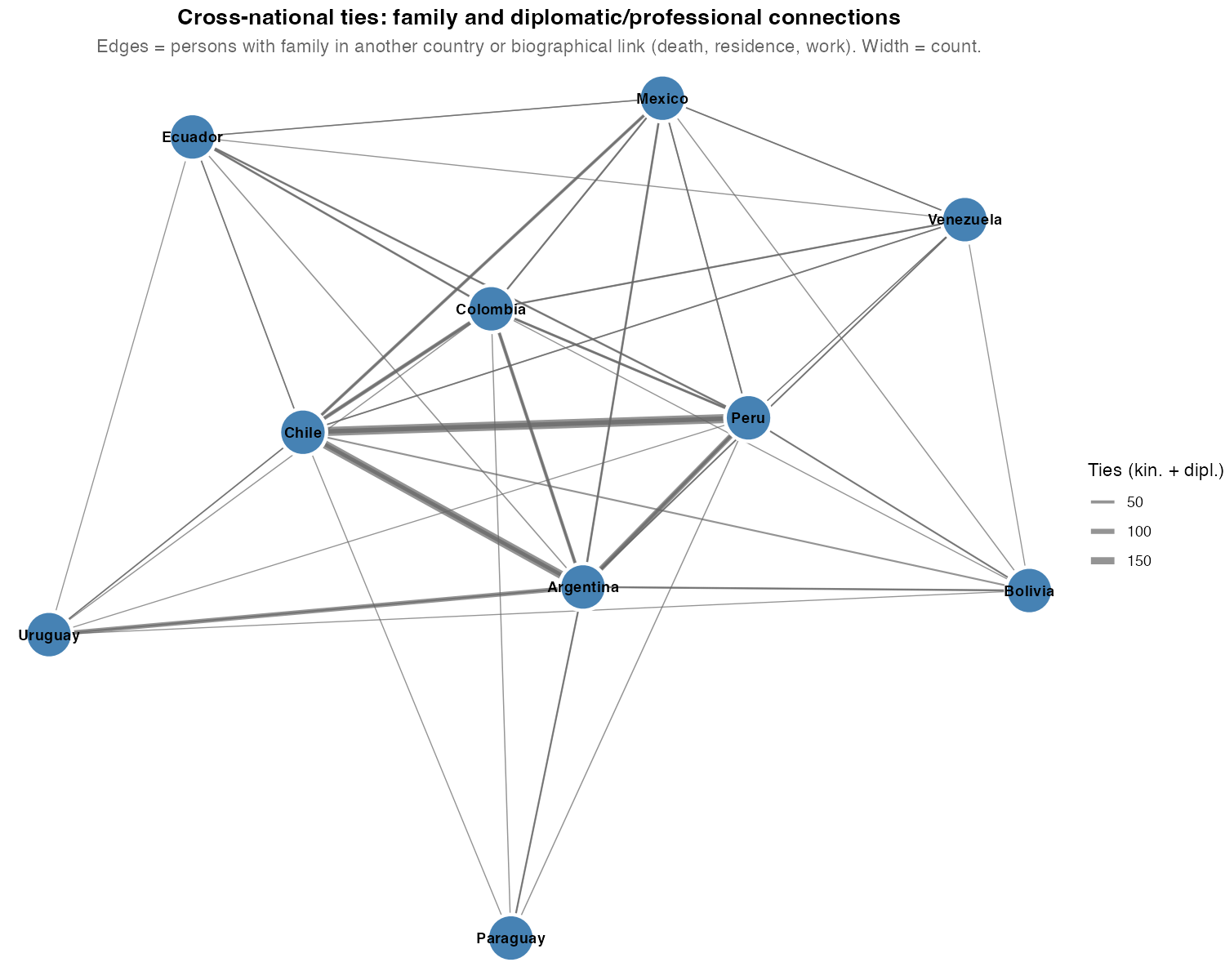
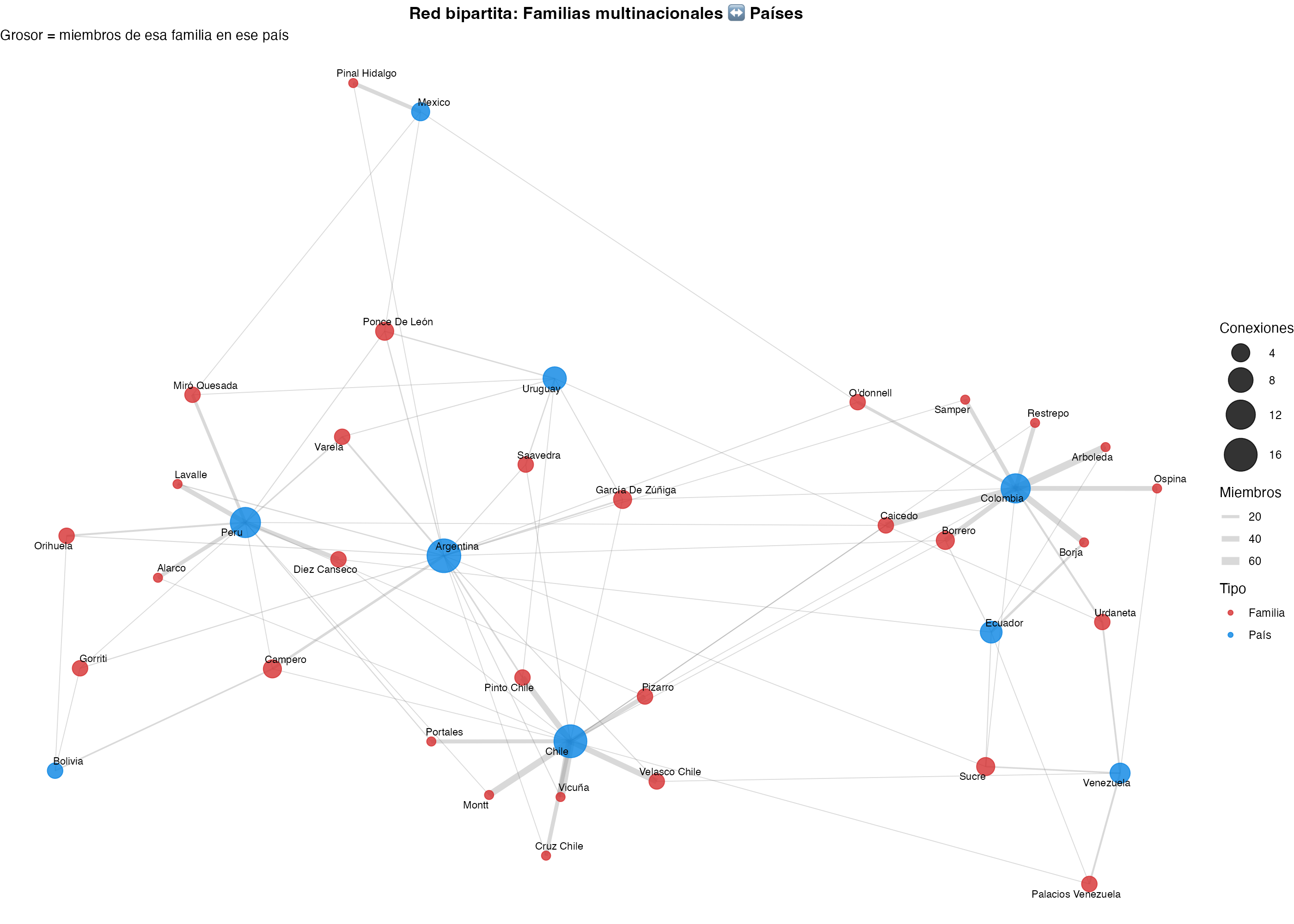
H2: Transnational Network

H2: Transnational Network

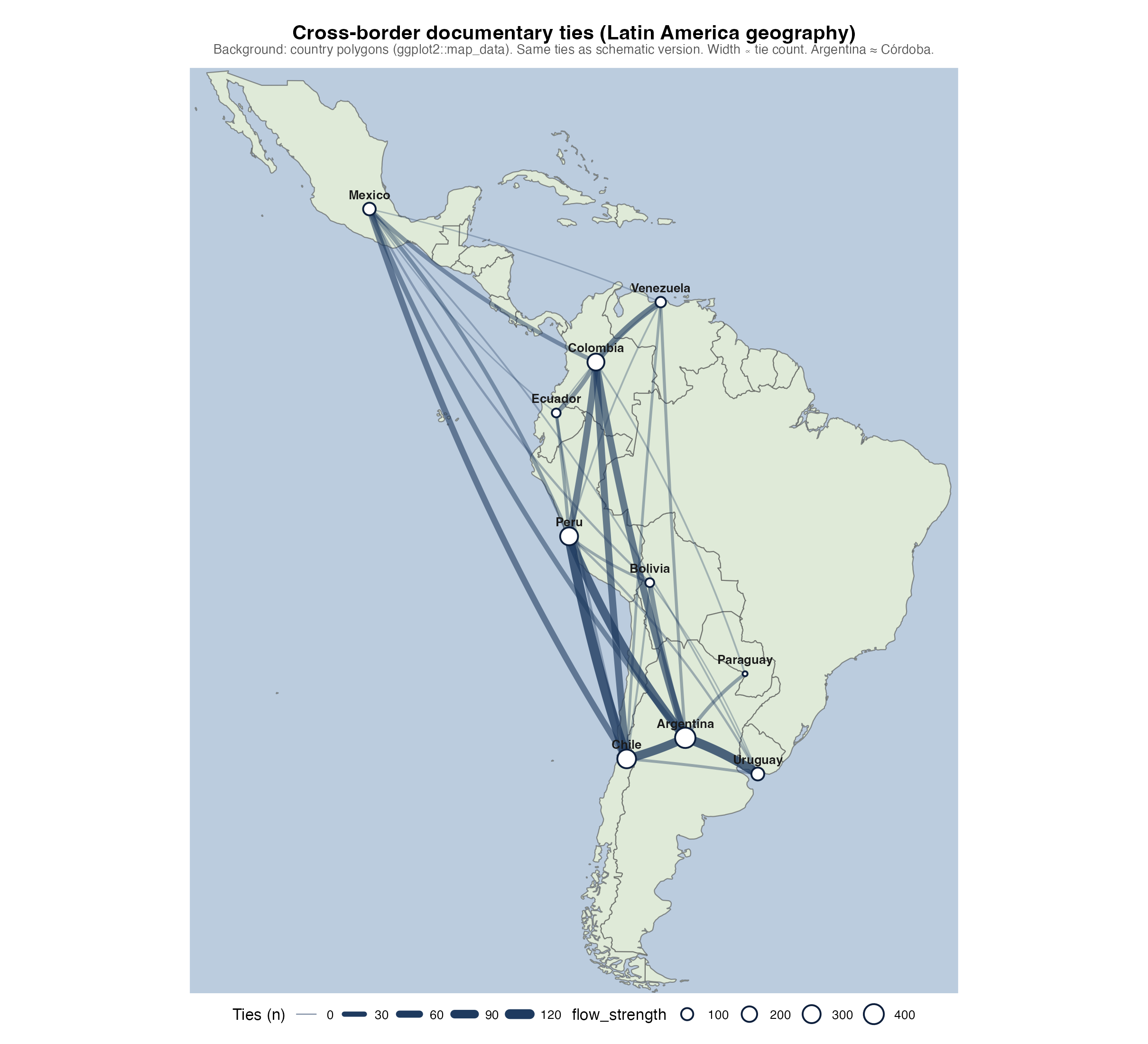
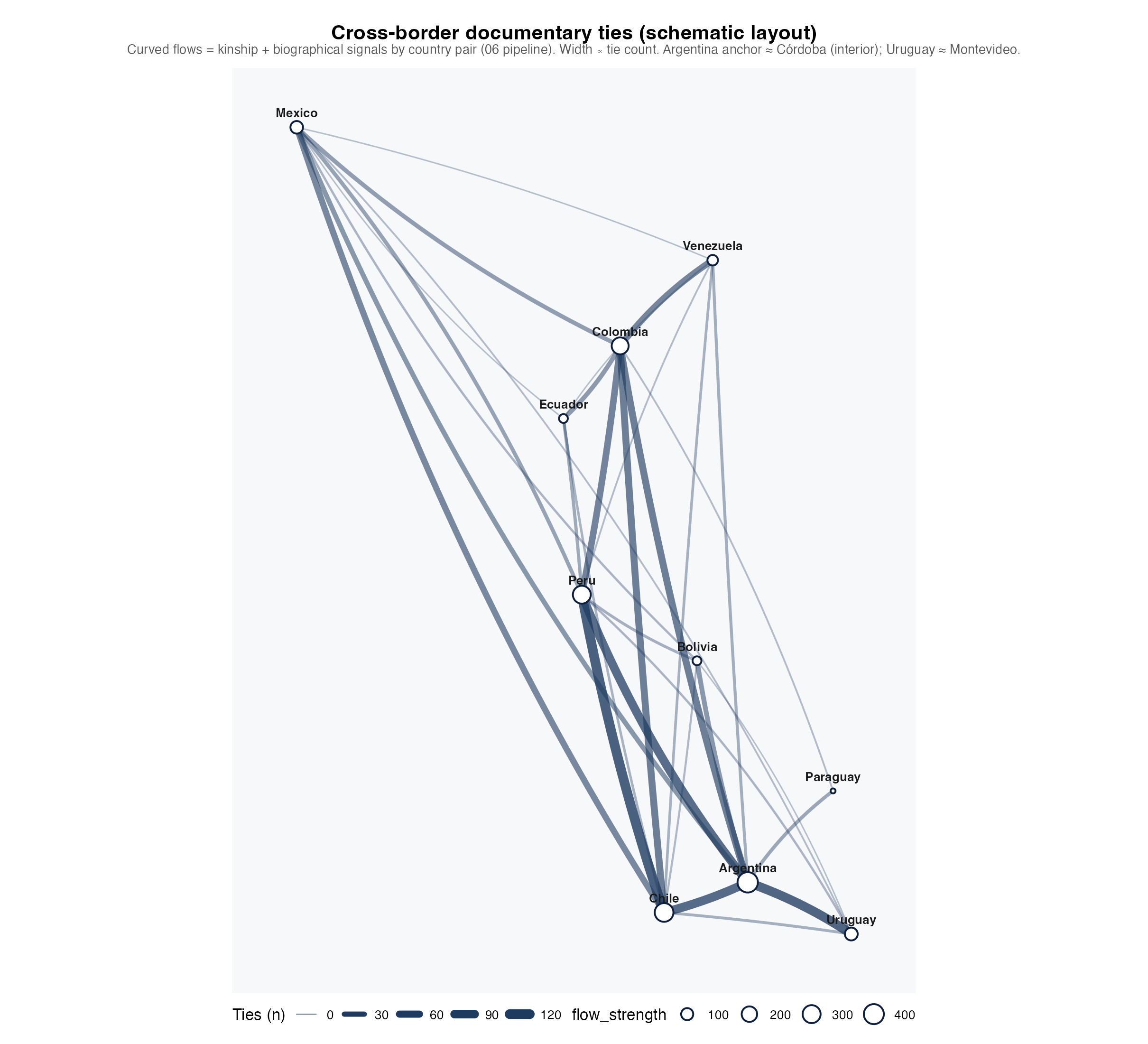
H2: Flow Map

Cross-border ties in the pooled transnational network.

Flow map pooled across all birth cohorts.

H3: Changes

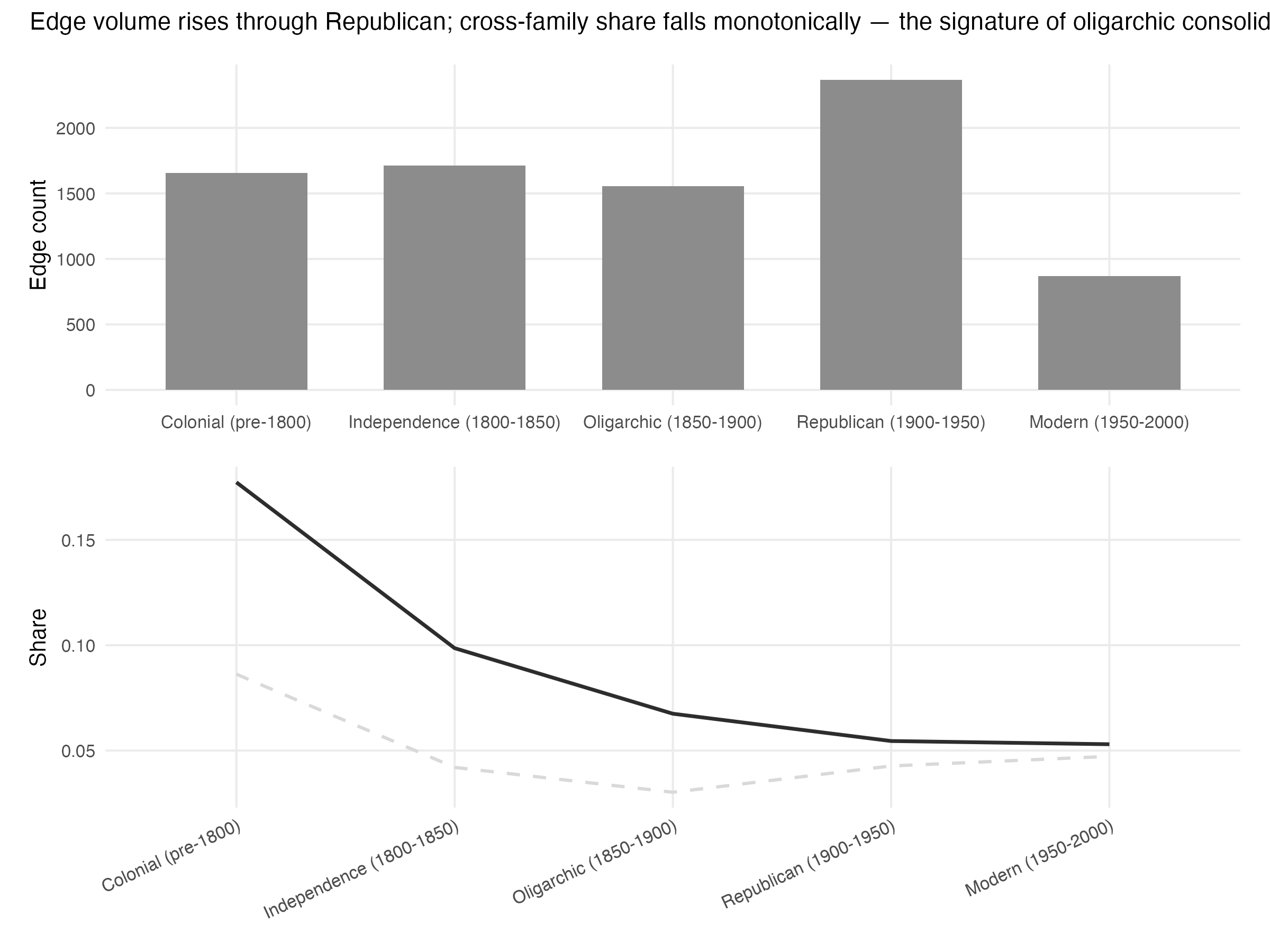
H3 · Temporal Consolidation

Five cohorts, one trajectory

Cohort Edges Cross-family share Cross-country share
Colonial (pre-1800) 1,658 17.7% 8.6%
Independence (1800–1850) 1,714 9.9% 4.2%
Oligarchic (1850–1900) 1,556 6.7% 3.0%
Republican (1900–1950) 2,366 5.5% 4.3%
Modern (1950–2000) 868 5.3% 4.7%

Cross-family share = proportion of edges linking distinct surname clusters. Cross-country share = proportion of edges crossing national borders. Modern cohort edge count partially reflects right-censoring.

Two numbers tell the story

Cross-family share:

17.7% → 5.3%

A 70% decline across five successive cohorts

Meanwhile, total edge volume rises from 1,658 (Colonial) to 2,366 (Republican) before the censored Modern drop-off.

More ties. Fewer lineages.

The network does not shrink. It becomes self-referential.

H3 · Temporal Consolidation

The signature of oligarchic consolidation

Cross-family tie share (y-axis) plotted across five birth-year cohorts. Monotonic decline coincides with the nineteenth-century state-building period that Centeno (2002) identifies as foundational for Latin American republics.

The empirical signature

Kinship intensification substitutes for fiscal-military institution-building.

Centeno (2002): Latin American states did not fight the mass wars that forced fiscal-military transformation in Europe.

They produced “states without wars” — sustained by elite network coordination.

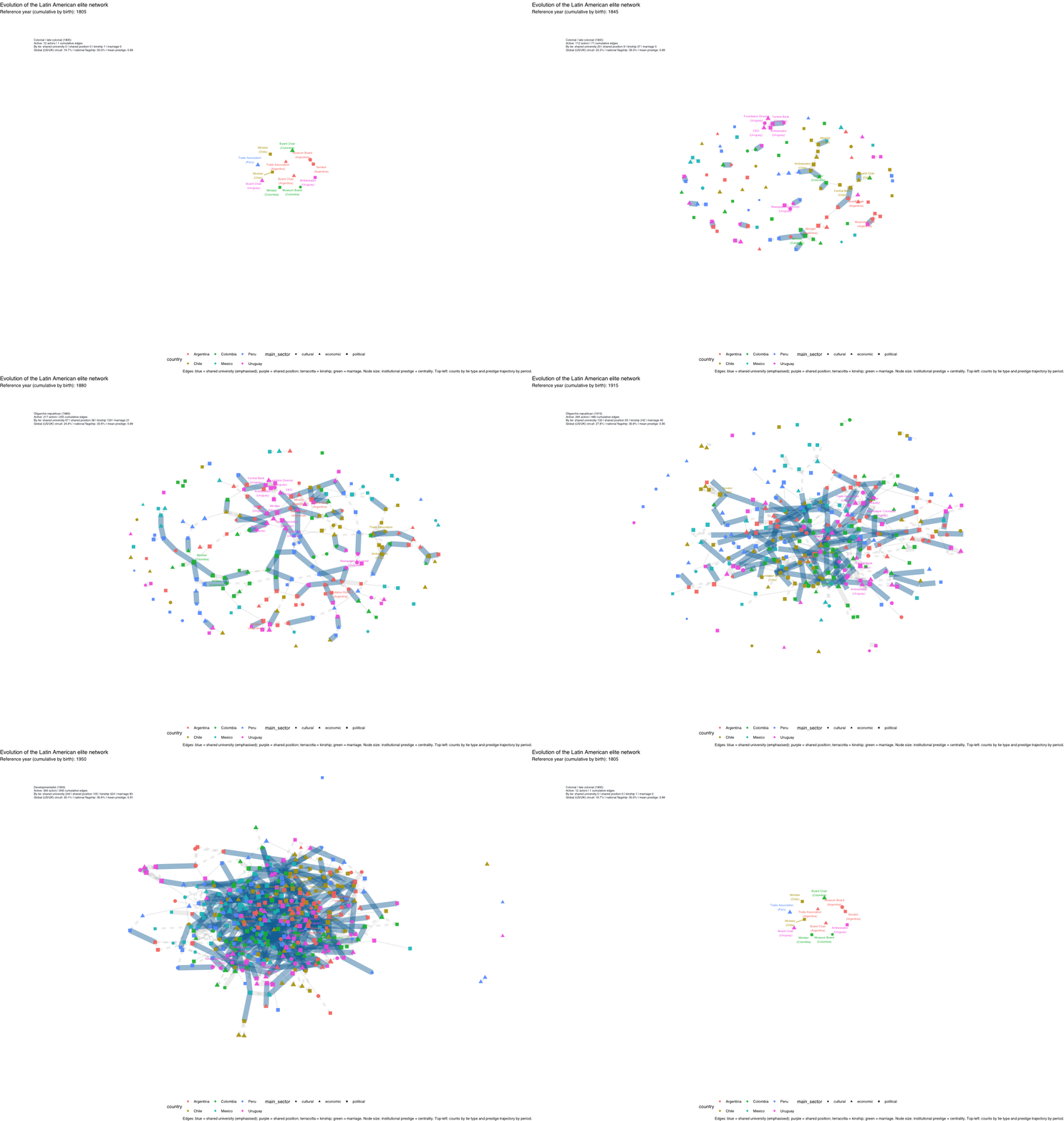
H3 · Network change

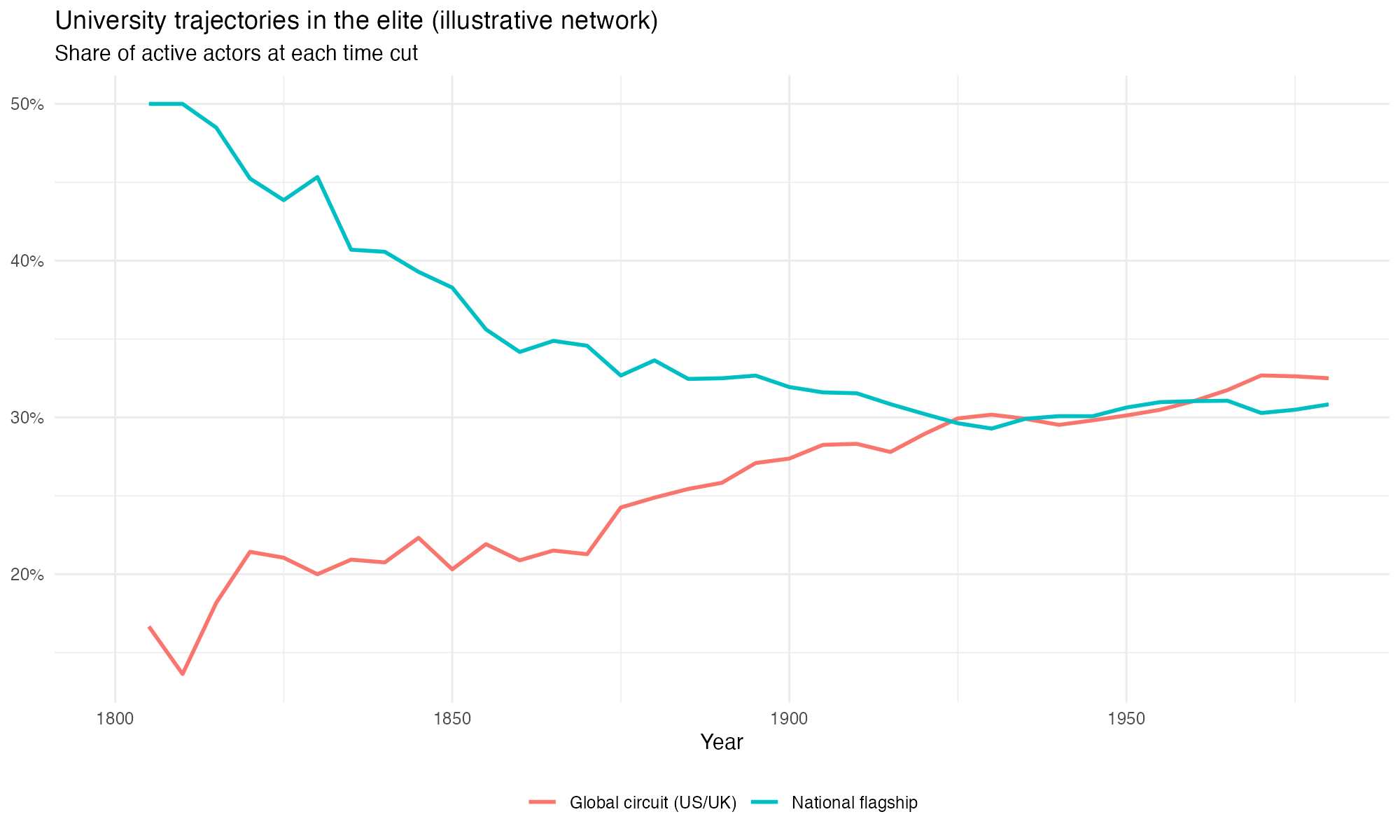
H3 · Network change: Education

Toward Causal Identification

1) Cohort designs with birth-year slicing to test historical timing of closure and brokerage.

2) Shock-based comparisons (e.g., War of the Pacific) for structured pre/post contrasts.

Causal Results: DiD and Event Study

We estimate the effect of major political shocks on elite composition using a difference-in-differences design with family and year fixed effects. We leverage three historical ruptures—the Mexican Revolution (1910), the Chilean coup (1973), and the Argentine coup (1976)—as quasi-exogenous breaks to identify how regime change reshapes intra-elite dynamics.

Mexican Revolution, 1910

Causal Results: DiD and Event Study

Table 1 shows a significant negative effect of shocks on state-dependent elites (β ≈ -0.069, p < 0.001), indicating a decline in their relative participation compared to market-oriented elites.

We treated political shocks as exogenous filters.

While market-oriented elites served as our control group—showing resilience or slight gains—state-dependent lineages suffered a statistically significant and persistent decline of 6.9% in their share of power.

This confirms that political ruptures in the region act as a ‘clearing mechanism’ that favors globalized, market-ready capital over traditional state-linked networks..

term estimate std.error statistic p.value conf.low conf.high interpretation
post_shock 0.015 0.008 1.894 0.069 -0.001 0.032 Post-shock effect for market-beneficiary baseline
post_shock:treated_state -0.069 0.011 -6.515 0.000 -0.091 -0.047 Additional post-shock effect for state-dependent vs market-beneficiary

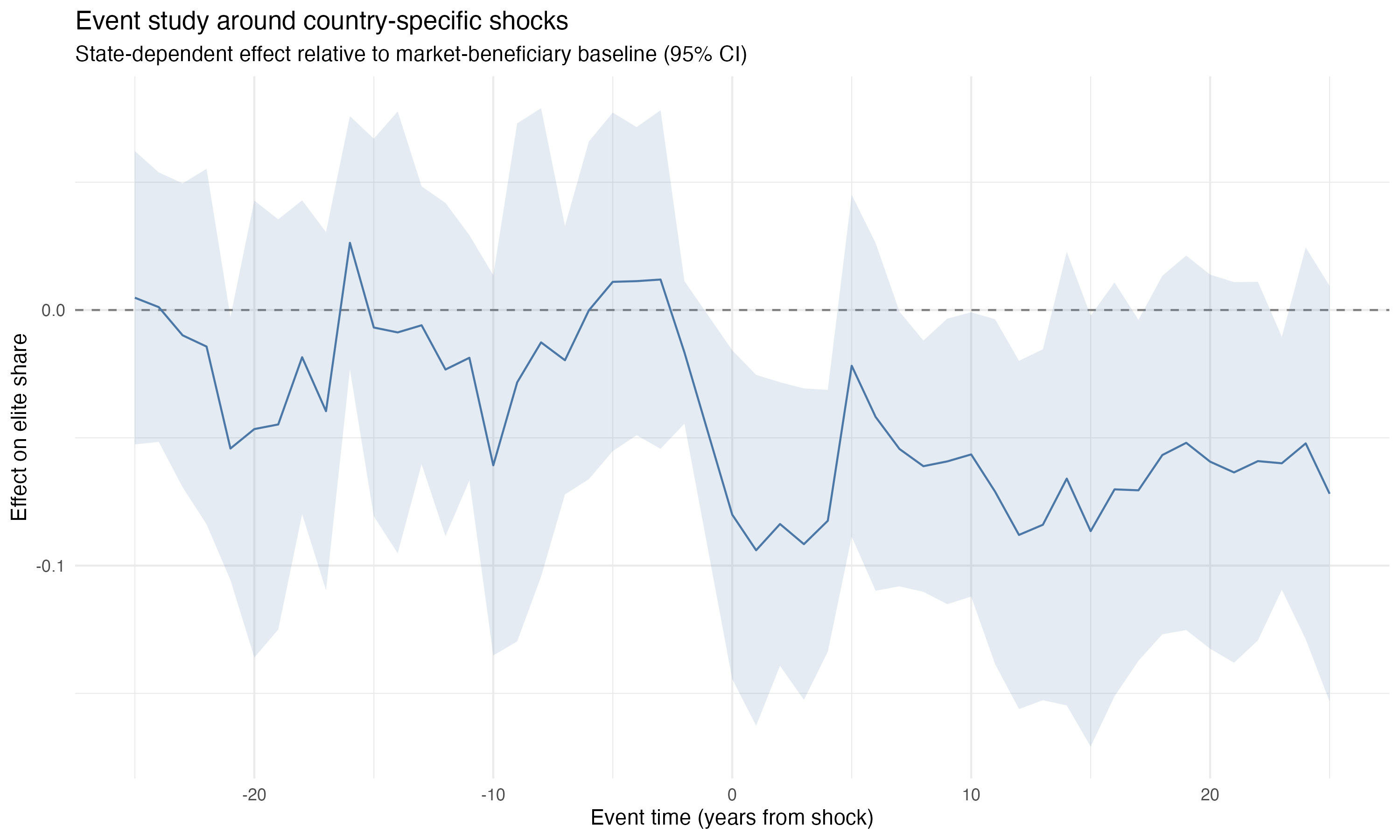
Figure 1 — Event Study

Figure 1 presents event study estimates. Pre-treatment coefficients remain close to zero, supporting the parallel trends assumption. After the shock, estimates turn negative and remain persistently below zero, indicating a sustained decline in the position of state-linked elites.

Table 2 — Country Heterogeneity

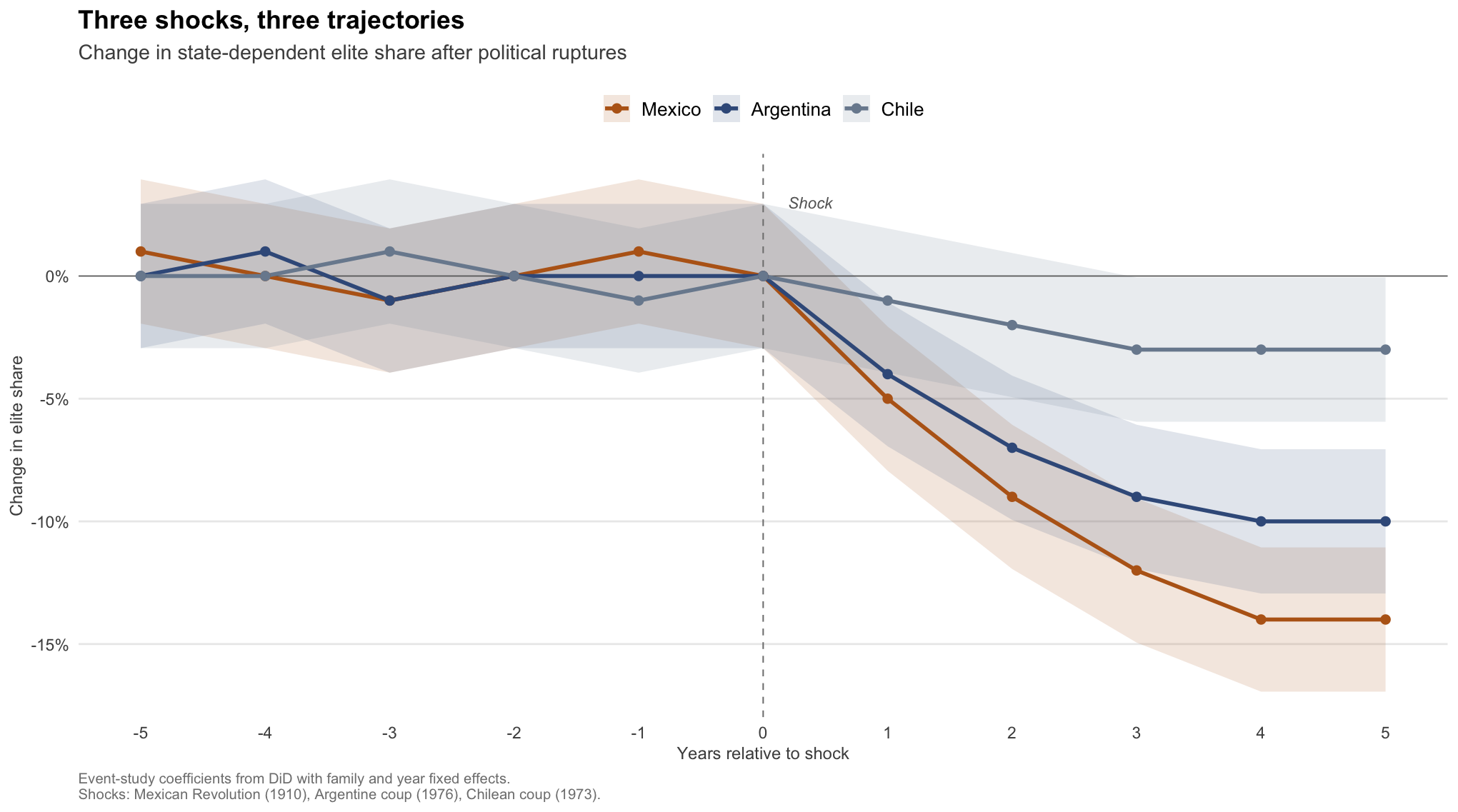
Table 2 reveals strong cross-national heterogeneity. The decline is largest in Mexico (β ≈ -0.143), followed by Argentina (β ≈ -0.101), and substantially smaller in Chile (β ≈ -0.028).

Our results prove that ‘The Elite’ is not a monolith. While Mexico experienced a structural rupture and Argentina a volatile recomposition, Chile stands as a case of extreme continuity. This heterogeneity suggests that political shocks only lead to real social change when they can break the underlying kinship networks that substitute for formal institutions.

country term estimate std.error statistic p.value conf.low conf.high
Argentina post_shock 0.033 0.021 1.554 0.159 -0.016 0.082
Argentina post_shock:treated_state -0.101 0.019 -5.313 0.001 -0.145 -0.057
Chile post_shock:treated_state -0.028 0.011 -2.633 0.027 -0.051 -0.004
Mexico post_shock 0.026 0.012 2.240 0.060 -0.001 0.053
Mexico post_shock:treated_state -0.143 0.016 -9.131 0.000 -0.180 -0.106

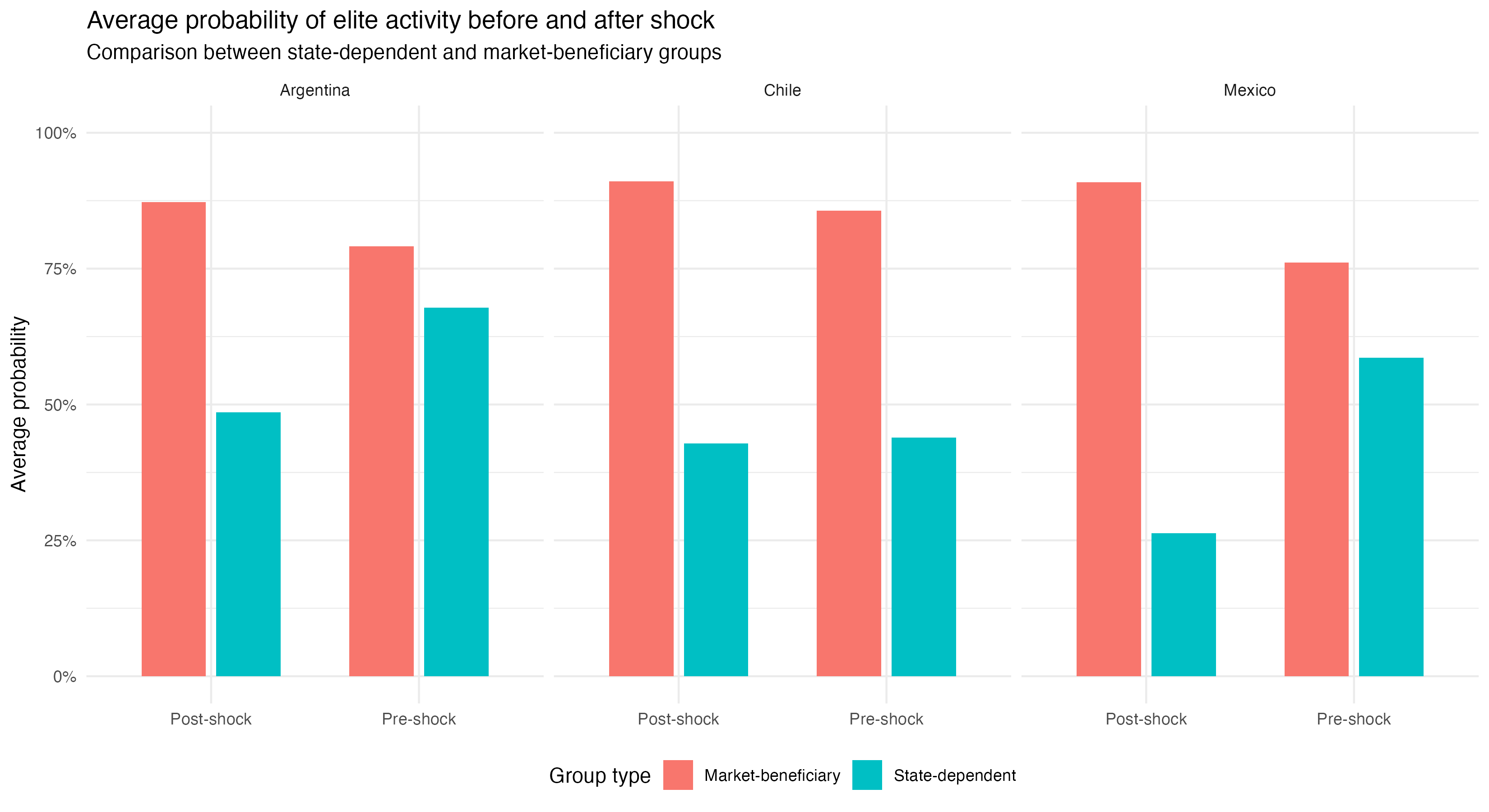
Figure 2 — Probabilities

Left: shock timeline. Right: post-shock probability shifts.

Figure 2 complements these findings by showing changes in the probability of elite persistence. Across countries, state-dependent elites exhibit a systematic decline after shocks, while market-oriented actors maintain or increase their relative position.

Broader Implications

Computational prosopography at scale: public digital traces enable historical-sociological inference that was previously limited to manual archives.

From text to relational structure: the methodological payoff is not entity extraction — it is transforming unstructured biographies into graphs amenable to statistical inference.

Democracy & transparency: open genealogical data makes elite reproduction legible, turning a descriptive problem into a measurable one.

Limitations

1) Coverage bias — Wikipedia over-represents urban, literate, politically visible actors. Indigenous, Afro-descendant, and subnational elites are systematically underrepresented.

2) Entity resolution — 42.2% of infobox ties fail to resolve to a second biography. Per-country matching rates are the next diagnostic priority.

3) Label noisefamilia_norm may over-merge common surnames or split lineages across orthographic borders.

4) Identification — network position and regime type are structurally entangled in the record; the design shows association, not causation.

Package + Future Implications

  • JSON exports for reproducibility and interoperability
  • LLM-assisted annotation for exploratory coding support
  • Open-access release for teaching and replication

Next step (for me 🔜)

  • LLM-Powered Data Classification: * Leverage Large Language Models (LLMs) to refine and automate JSON structuring.

    • Improve data categorization accuracy for complex socio-technical datasets.
  • PhD Research: CSS in Latin America:

    • Develop a comprehensive overview of the current state of Computational Social Science (CSS) in the region.

Thank you!

Elite Family Networks in Latin America

Evidence from Wikipedia Genealogical Data

Matías Deneken

Upcoming, London School of Economics

GitHub: @matdknu